
In today’s digital landscape, having a website isn’t enough. You need people to find it. That’s where Search Engine Optimization (SEO) comes in—the practice of improving your website’s visibility in search engine results to attract more organic traffic.
Understanding SEO: The Basics
SEO is the process of optimizing your website to rank higher in search engine results pages (SERPs) when people search for products, services, or information related to your business. When done correctly, SEO helps search engines like Google understand your content and connect it with users actively searching for what you offer.
Think of search engines as librarians for the internet. When someone asks a question, the search engine sifts through billions of web pages to deliver the most relevant, high-quality results. SEO ensures your website is one of those top results.
How Search Engines Work
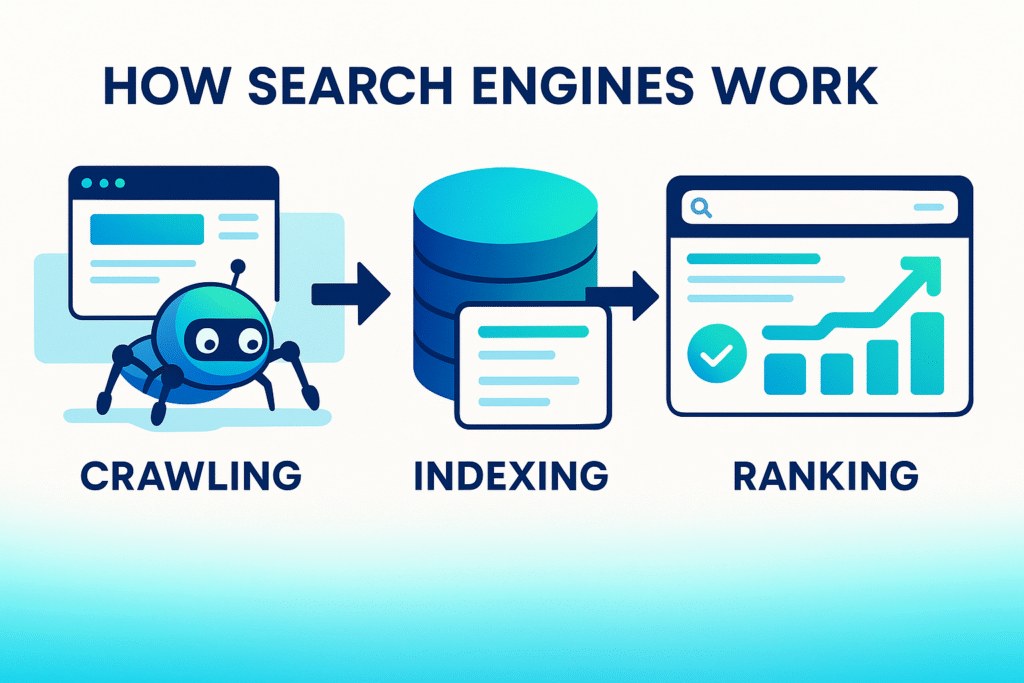
Before discussing SEO strategies, it’s important to understand how search engines operate. The process involves three key stages:
Crawling: Search engines use automated bots (called crawlers or spiders) to discover new and updated content across the web. These bots follow links from page to page, collecting information about each site they visit.
Indexing: Once a page is crawled, the search engine analyzes its content—text, images, videos, and metadata—and stores it in a massive database called an index. This index is what the search engine searches through when responding to queries.
Ranking: When someone performs a search, the search engine uses complex algorithms to determine which indexed pages are most relevant and valuable for that query. These algorithms consider hundreds of factors to rank pages in order of relevance and quality.
The Core Components of SEO
SEO consists of several interconnected elements that work together to improve your search visibility:
On-Page SEO
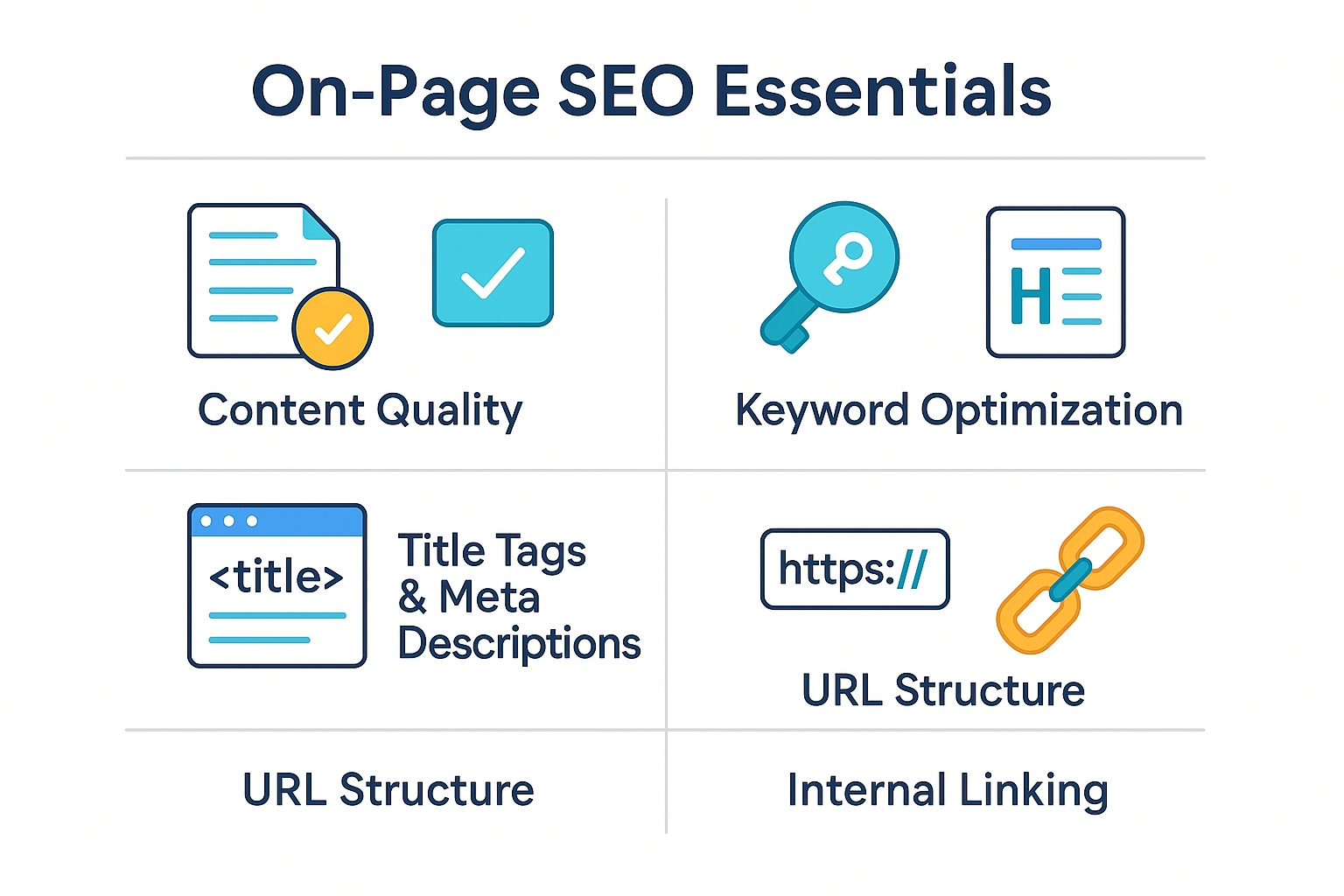
On-page SEO focuses on optimizing individual web pages to rank higher and earn more relevant traffic. Key elements include:
Content Quality: Creating valuable, informative content that genuinely answers user questions and solves problems is fundamental. Search engines prioritize content that demonstrates expertise, authoritativeness, and trustworthiness.
Keyword Optimization: Strategically incorporating relevant keywords—the terms people actually search for—into your content, titles, headings, and meta descriptions helps search engines understand your page’s topic.
Title Tags and Meta Descriptions: These HTML elements provide concise summaries of your page content. While meta descriptions don’t directly impact rankings, compelling ones improve click-through rates from search results.
Header Tags: Using H1, H2, and H3 tags properly structures your content, making it easier for both users and search engines to understand your page hierarchy.
URL Structure: Clean, descriptive URLs that include relevant keywords help both users and search engines understand what a page is about before even visiting it.
Internal Linking: Linking to other relevant pages on your website helps distribute page authority and helps search engines discover and understand your site structure.
Technical SEO
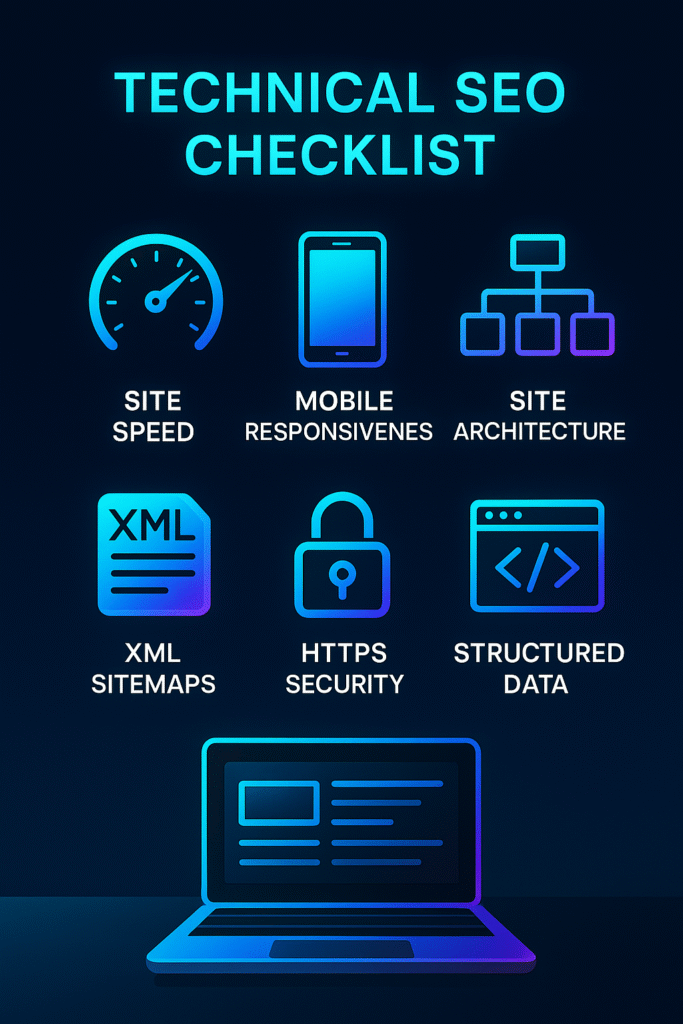
Technical SEO ensures search engines can efficiently crawl, index, and understand your website:
Site Speed: Faster-loading pages provide better user experiences and are favored by search engines. Optimizing images, leveraging browser caching, and minimizing code can significantly improve load times.
Mobile Responsiveness: With mobile searches dominating, having a mobile-friendly website is essential. Google uses mobile-first indexing, meaning it primarily uses the mobile version of your site for ranking.
Site Architecture: A logical, well-organized site structure with clear navigation helps both users and search engines find content easily.
XML Sitemaps: These files list all important pages on your site, helping search engines discover and index your content more efficiently.
Security (HTTPS): Secure websites using HTTPS encryption are trusted more by both users and search engines.
Structured Data: Adding schema markup helps search engines understand your content better and can enable rich snippets in search results.
Off-Page SEO
Off-page SEO involves activities outside your website that impact your rankings:
Backlinks: Links from other reputable websites to yours act as “votes of confidence” in your content’s quality. High-quality backlinks from authoritative sites are one of the strongest ranking signals.
Brand Mentions: Even unlinked mentions of your brand across the web can contribute to your site’s authority and visibility.
Social Signals: While not direct ranking factors, social media engagement can indirectly boost SEO by increasing content visibility and attracting backlinks.
Online Reviews: Positive reviews on platforms like Google Business Profile enhance local SEO and build trust with potential customers
Read Also: Web Design Best Practices 2025.
How SEO Works in Practice
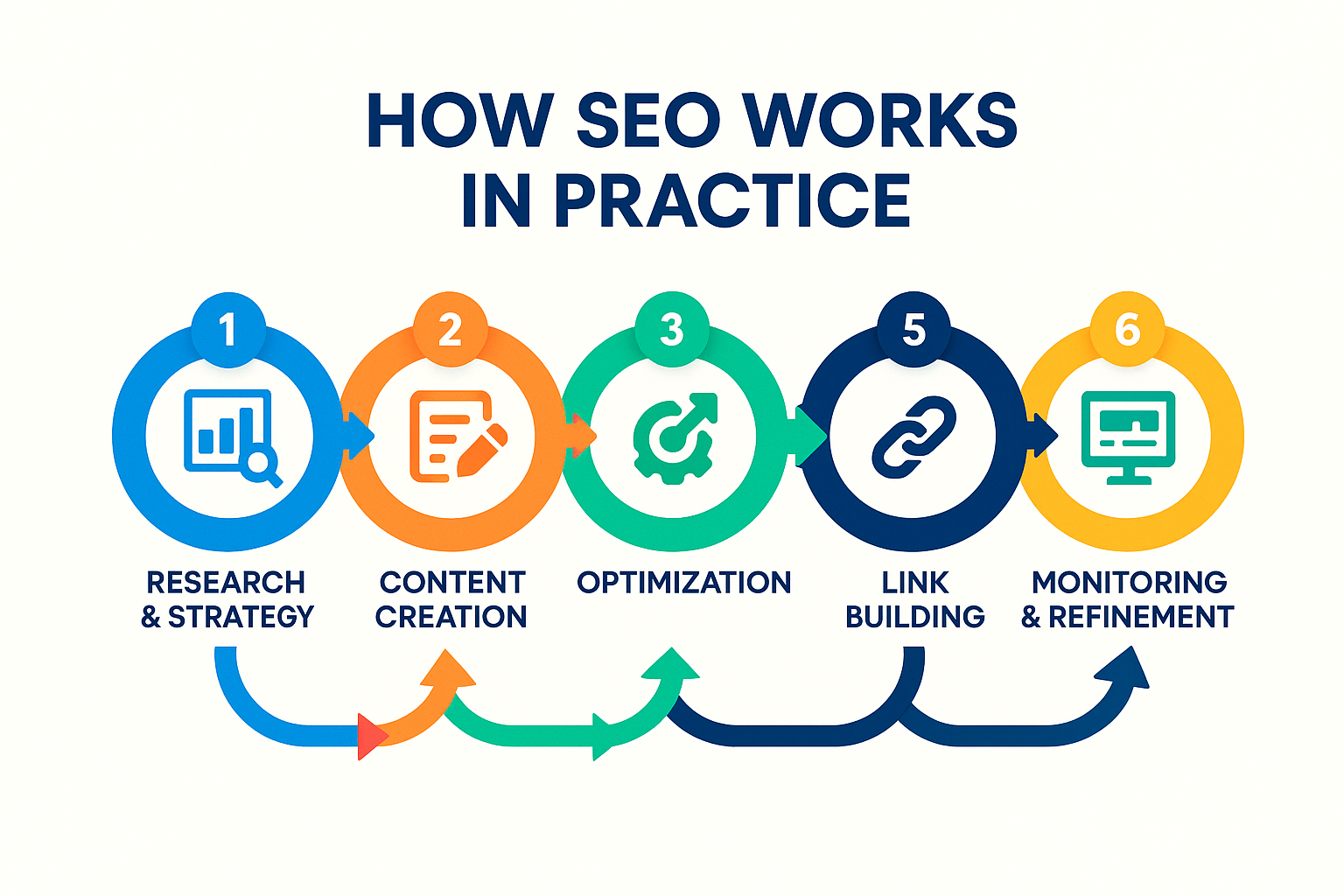
Implementing effective SEO is an ongoing process that typically follows this workflow:
Research and Strategy: Begin by understanding your target audience, researching relevant keywords, and analyzing competitors. This foundation informs your entire SEO strategy.
Content Creation: Develop high-quality content that addresses user intent and naturally incorporates target keywords. Focus on providing genuine value rather than keyword stuffing.
Optimization: Apply on-page SEO best practices to your content, ensuring proper use of title tags, headers, meta descriptions, and internal links.
Technical Improvements: Audit and enhance your website’s technical aspects, addressing issues with speed, mobile-friendliness, and crawlability.
Link Building: Develop a strategy to earn quality backlinks through content marketing, guest posting, partnerships, and creating link-worthy resources.
Monitoring and Refinement: Use analytics tools to track performance, identify what’s working, and continuously refine your approach based on data.
The Timeline: When Will SEO Show Results?
SEO is not an overnight solution. Most businesses begin seeing meaningful results within three to six months, though competitive industries may take longer. The timeline depends on factors like your site’s current authority, competition level, content quality, and the consistency of your efforts.
The key is patience and persistence. Unlike paid advertising that stops delivering results when you stop paying, SEO builds long-term value that compounds over time.
Why SEO Matters for Your Business
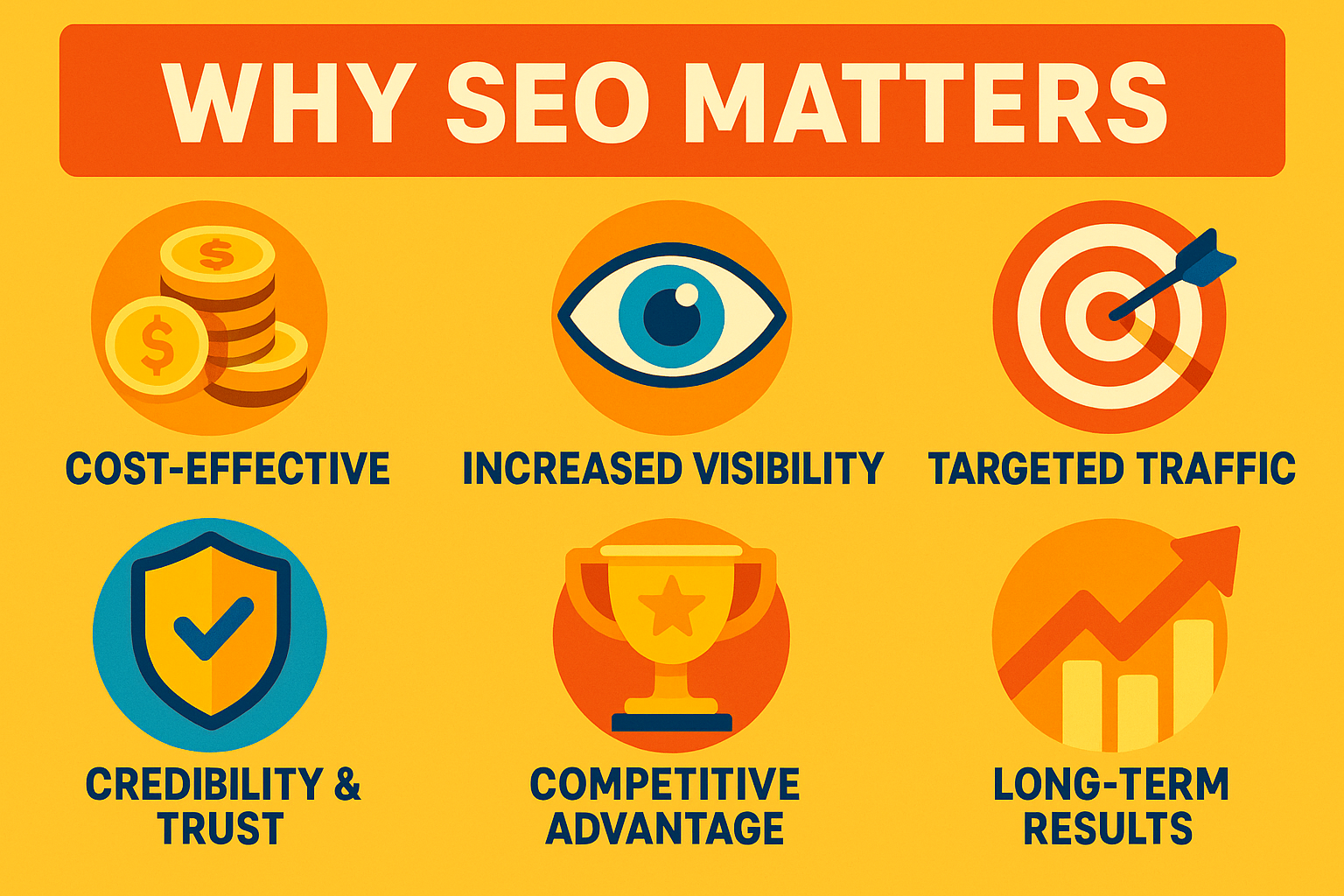
Investing in SEO delivers numerous benefits:
Cost-Effective Marketing: While SEO requires time and resources, organic traffic doesn’t have a per-click cost like paid advertising, making it more sustainable long-term.
Increased Visibility: Higher rankings mean more people see your business when searching for relevant products or services.
Targeted Traffic: SEO attracts users actively searching for what you offer, resulting in higher-quality leads and better conversion rates.
Credibility and Trust: Ranking high in organic search results signals authority and trustworthiness to potential customers.
Competitive Advantage: Strong SEO helps smaller businesses compete with larger competitors by leveling the digital playing field.
Long-Term Results: Unlike paid ads that disappear when your budget runs out, SEO builds sustainable visibility that continues delivering value over time.
Getting Started with SEO
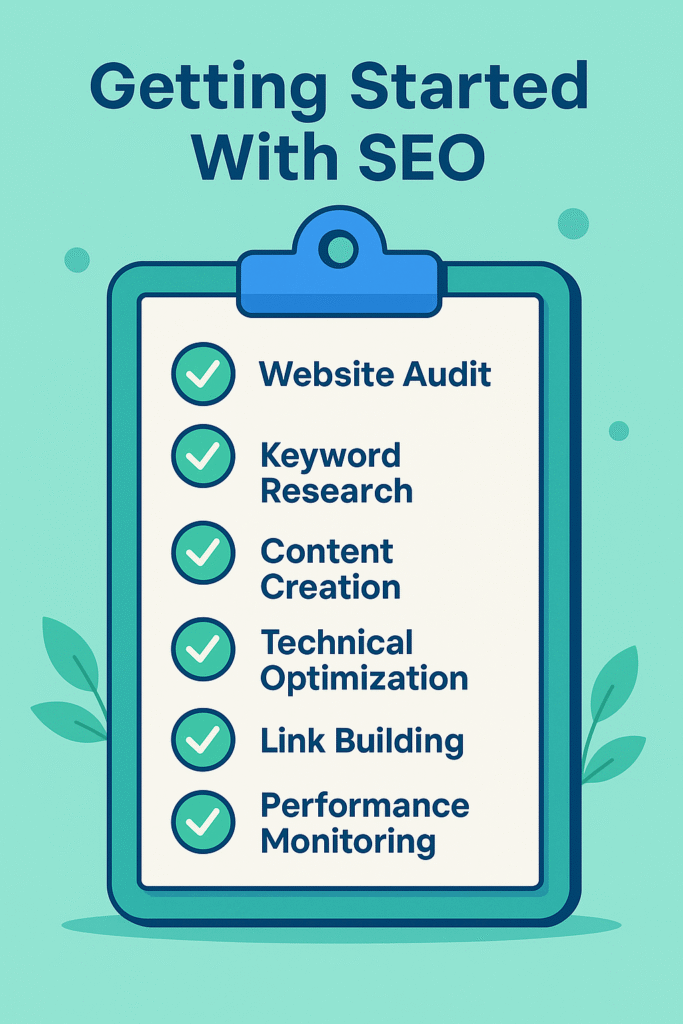
If you’re ready to improve your website’s search visibility, start with these foundational steps:
- Conduct a website audit to identify current strengths and weaknesses
- Research keywords your target audience actually uses
- Create valuable content that addresses user needs
- Optimize your website’s technical foundation for speed and mobile-friendliness
- Build relationships that lead to quality backlinks
- Monitor your progress using tools like Google Analytics and Google Search Console
SEO is a marathon, not a sprint. The businesses that succeed are those that commit to consistent, quality-focused efforts over time.
Partner with SEO Experts
Navigating the complexities of SEO can be challenging, especially as search algorithms constantly evolve. At Damer Consult, we help businesses develop and execute comprehensive SEO strategies that drive measurable results. Whether you’re just starting out or looking to enhance your existing efforts, professional guidance can accelerate your success and help you avoid costly mistakes.
Ready to boost your online visibility and attract more qualified leads? Let’s talk about how SEO can transform your digital presence.
Looking for expert SEO guidance? Contact Damer Consult today to discuss your digital marketing needs and discover how we can help your business thrive online.